Total gift of self; an essay concerning Frodo
This essay was written in one day, so its not my best work, but it’s alright…
C.S. Lewis wisely said, “There are far, far better things ahead than any we leave behind.” (Lewis) Heroism begins when we step outside the comfort of familiar territory. Frodo displays this when he says, “The road goes ever on and on. Down from the door where it began. Now far ahead the Road has gone, and I must follow, if I can, pursuing it with weary feet, until it joins some larger way, where many paths and errands meet. And whither then? I cannot say.” (Tolkien 96) In the epic tale Lord of the Rings, Frodo makes a sacrifice that blesses others in three ways: he gives up his comfort in The Shire, willingly accepts the Ring, and perseveres through the many hardships that the journey entails.
The Shire can be described in two words: joyful and serene. Imagine running barefoot through the grassy hills, or watching fireworks at Bilbo’s party. Nothing in all of Middle Earth can compare. But what if you had to leave it all behind, not knowing if you’d ever return? Frodo must make a decision when Gandalf comes to him with this proposal; he must weigh the difficulties of destroying the Ring against leaving good food, joyful friends, and a warm bed.
Frodo makes another sacrifice when Gandalf outlines the plan to destroy the Ring. Deep down, Frodo realizes he is meant to bear the Ring. Another form of heroism is not only recognizing what your purpose is, but executing it. Frodo shows this when he says, “I will take the Ring, though I do not know the way." (Tolkien 352) At this moment, Frodo realizes that no matter the outcome for himself, he must be the one to save Middle Earth.
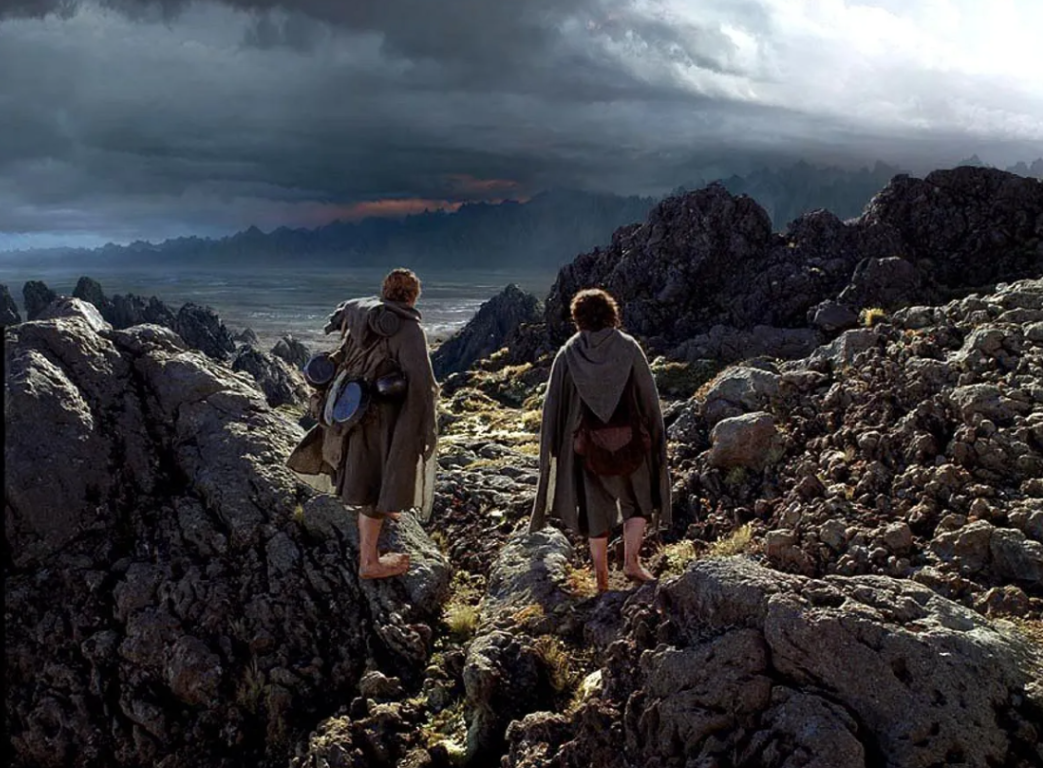
The final way Frodo makes a sacrifice that blesses others is by persevering through the many hardships of this treacherous journey to destroy the Ring. Frodo underwent extreme physical and mental exhaustion as he trekked through the rough terrain of Cirith Ungol, trying to sleep in all discomforts, and deciding whether to spare Gollum or not. Meanwhile the Ring pains his conscience, slowly making him heavier and more weary. Will he ever shed the Ring and return home? Staying strong until the last moment before he destroys the Ring was vital to all of Middle Earth. This is the sort of tenacity that takes a true hero.
Another person who displays Frodo’s self-sacrifice is Abraham in The Bible. Despite having been well-established and peaceful in Ur of the Chaldees, God asked Abraham to go to Canaan. Similar to Frodo, he “obeyed when he was called to go out to a place…and he went out, not knowing where he was to go.” (Hebrews 11:8) Abraham was 75 years old; he left a highly advanced civilization to inhabit a pagan land. Similar to Frodo, he was leaving his friends, lifestyle, and comfort to answer the call of a voice he trusted. Through his self-sacrifice, he blessed his descendants as God had promised.
Frodo and Abraham display heroic virtue by choosing to accept their call, despite not knowing the end result. They sacrifice their own comforts, and in doing so, they bring about greater good for their people. Frodo gives up his comfort in The Shire, willingly accepts the Ring, and perseveres through the many hardships that his journey entails. “I tried to save the Shire, and it has been saved, but not for me. It must often be so, Sam, when things are in danger: some one has to give them up, lose them, so that others may keep them.” (Tolkien 1346)
Thanks for reading! (:
-Simon