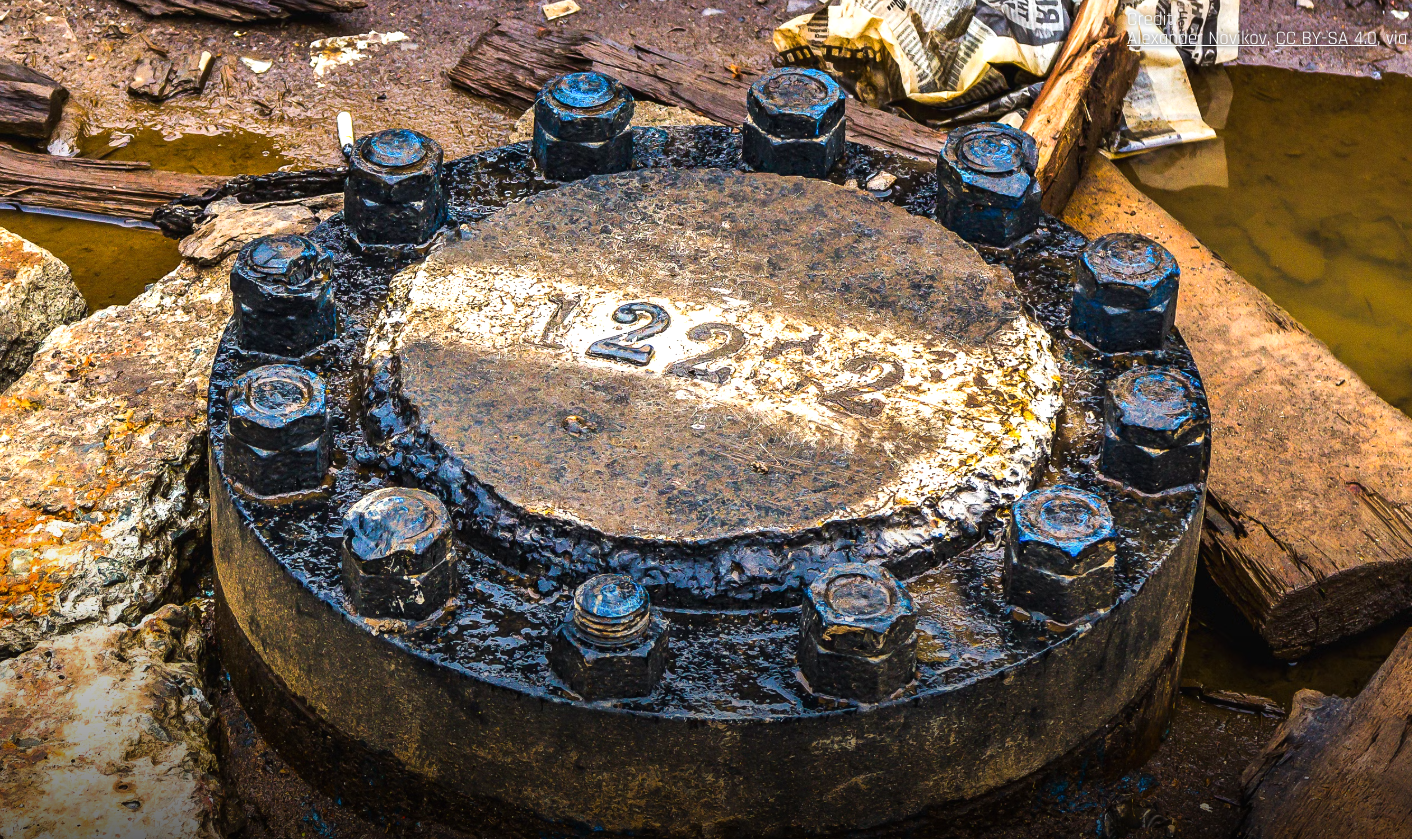
Kola Superdeep Borehole
Have you ever wondered how close humans have come to the Earth’s core?
Sure, we’ve tackled the highest mountains, explored the deepest caves, and travelled a quarter of a million miles away from Earth. But why haven’t we explored what is right beneath our feet? It doesn’t seem to make sense.
Until you learn more.
The Kola Superdeep Borehole is the deepest artificial hole on Earth. Located in the Kola Peninsula on the northwest border of Russia, the hole is an astonishing 40,000 feet deep (7.6 miles).
Interestingly, it’s only 9 inches wide.
The Soviet Union began digging it in 1970 for scientific research and to prove their technological supremacy during the Cold War.
They used massive, customized drill rigs to drill with speed into the crust of the Earth. Initial drilling began with a modified oil rig. But in 1974, they installed a purpose-built “Uralmash-15000.” Instead of spinning the entire 40,000 foot drill pipe—which would snap under its own weight—they pumped pressurized mud down the pipe that powered a turbine, spinning only the drill bit at the bottom.
During the project, scientists learned (literally) groundbreaking geophysical discoveries, though they also discovered extreme engineering hurdles.
Some things they learned:
- Seismic surveys suggested a boundary where granite transitions to basalt at 22,000 feet down. However, drilling revealed a basaltic layer simply didn’t exist.
- Temperature increases were much steeper than models predicted. While the gradient remained normal at first, they had nearly doubled expectations by 40,000 feet. At this depth, they predicted around 175 degrees Fahrenheit; it was over 350 degrees!
- Geologists thought the compounded pressure would compress rocks into a dense, solid mass. Instead, they discovered airy, fracture-pockets with a high concentration of water.
- At extreme depths, the combination of high temperature and porosity caused the solid rock to behave more like scorching plastic, making it physically impossible to dig further.
The project was finally abandoned in 1992 after difficulties from extreme heat and pressure. Now, it sits welded shut with a boring bolted cement plug.
The Kola Superdeep Borehole really invites us to wonder what we will discover once we have the technology to go deeper. Pressure can do some pretty remarkable things; our knowledge of the layers of the Earth continues to grow in fascinating complexity.
What’s down there?
I hope this post wasn’t too…deep…for you! 😉